 Fred's ImageMagick Scripts
Copyright © Fred Weinhaus My scripts are available free of charge for non-commercial (non-profit) use, ONLY. For use of my scripts in commercial (for-profit) environments or non-free applications, please contact me (Fred Weinhaus) for licensing arrangements. My email address is fmw at alink dot net. If you: 1) redistribute, 2) incorporate any of these scripts into other free applications or 3) reprogram them in another scripting language, then you must contact me for permission, especially if the result might be used in a commercial or for-profit environment. Usage, whether stated or not in the script, is restricted to the above licensing arrangements. It is also subject, in a subordinate manner, to the ImageMagick license, which can be found at: http://www.imagemagick.org/script/license.php Please read the Pointers For Use on my home page to properly install and customize my scripts. |
|
Creates an animated transition between two images using a special effect distortion. |
last modified: September 26, 2017
|
USAGE: fxtransitions [-e effect] [-f frames] [-d delay] [-p pause] [-b bgcolor] [-r] infile1 infile2 [outfile]
-e .... effect ....... transition effect type: blur, explode, implode, pixelize, PURPOSE: To create an animated transition between two images using a special effect distortion. DESCRIPTION: FXTRANSITIONS creates an animated transition between two images using a special effect distortion. The special effects distortions include: blur, explode, implode, pixelize, recursion, spin, spread, swirl, zoomin and zoomout. ARGUMENTS: -e effect ... EFFECT is the type of distortion to use as the means for creating the animated transition between the two input images. The choices are: blur, explode, implode, pixelize, recursion, spin, spread, swirl, zoomin and zoomout. The default=blur. -f frames ... FRAMES is the number of frames in the animation of each of the two input images. Values are integers > 1. The default is 10. Thus the total number of frames will be 2*frames. If the animation is reversed, then the total number of frames will be 4*frames-2. -d delay ... DELAY between frames. Values are integers>0. The default=20 -p pause ... PAUSE is the delay to use for the first and last frame of the animation, i.e. the delay for each of the input images. The default=50 -b bgcolor ... BGCOLOR is the background color to use for fill when the effect is zoomout. Any valid IM color specification. The default=black. -r ... If supplied, then reverse the animation sequence, remove the first and last frames of the reversed sequence and append these reversed frames to the end of the animation. CAVEAT: No guarantee that this script will work on all platforms, nor that trapping of inconsistent parameters is complete and foolproof. Use At Your Own Risk. |
|
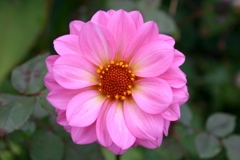
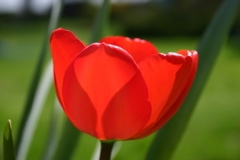
Two Flowers |
|
|
Flower 1 |
Flower 2 |
|
|
|
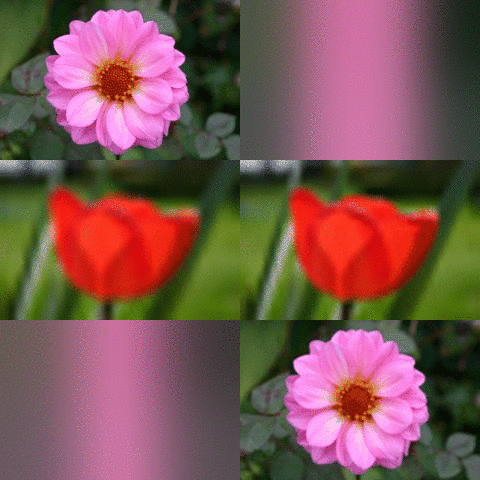
Blur |
Arguments: |
|
|
|
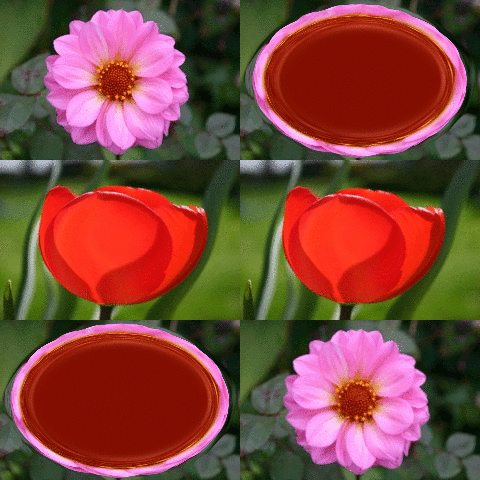
Explode |
Arguments: |
|
|
|
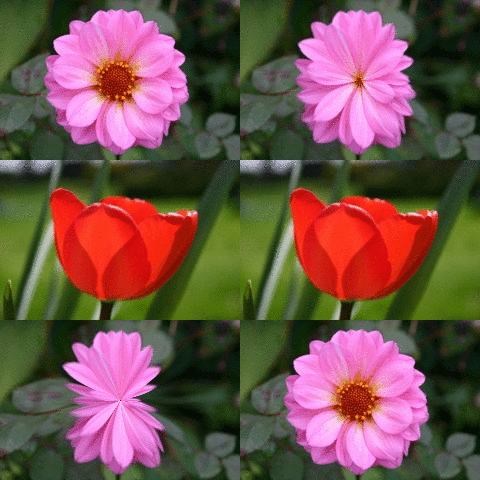
Implode |
Arguments: |
|
|
|
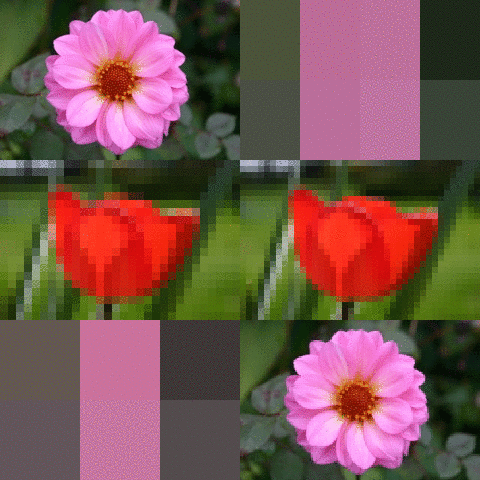
Pixelize |
Arguments: |
|
|
|
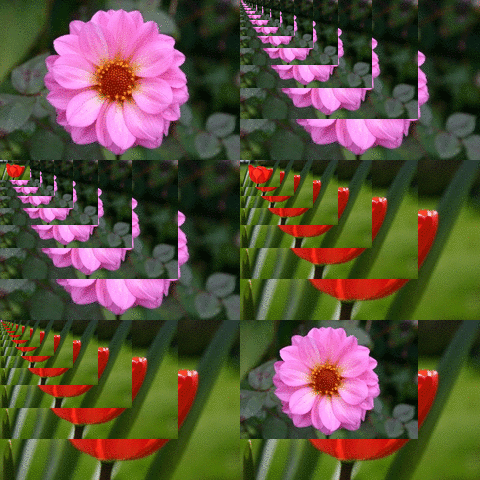
Recursion |
Arguments: |
|
|
|
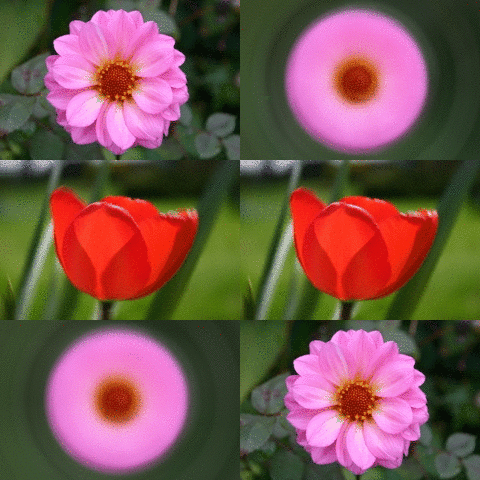
Spin |
Arguments: |
|
|
|
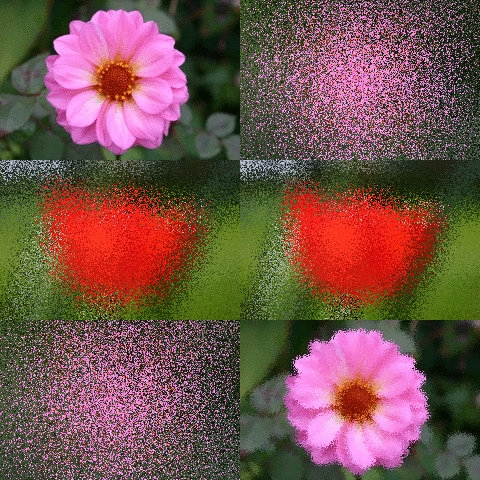
Spread |
Arguments: |
|
|
|
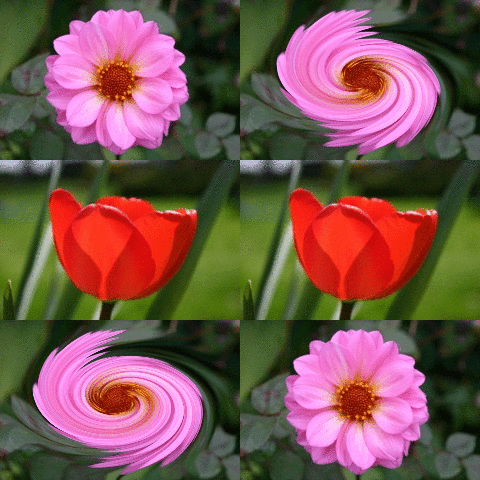
Swirl |
Arguments: |
|
|
|
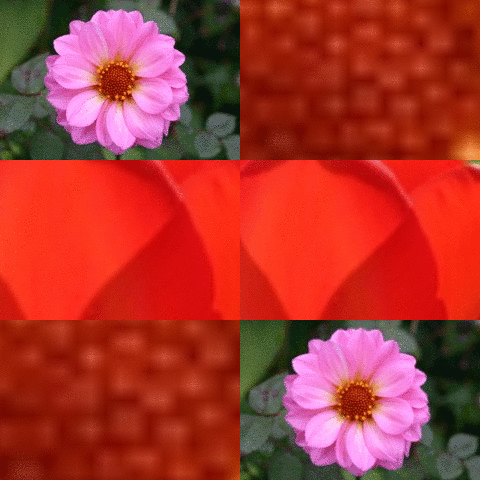
Zoom In |
Arguments: |
|
|
|
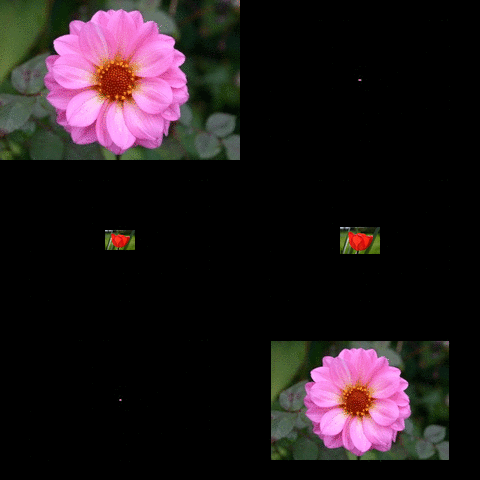
Zoom Out |
Arguments: |
|
|
|
What the script does is as follows:
This is equivalent to the following IM commands for the case of swirl with reversed frames.
|